
EZOGELIN SOUP
9th August 2025
Turkish-Style Red Lentil Balls
3rd February 2026Stuffed Vine Leaves with Minced Beef
(Southern Turkish Style – Etli Yaprak Sarma)
STUFFED VINE LEAVES WITH MINCED BEEF
Southern Turkish Style – Etli Yaprak Sarma
Stuffed vine leaves are a much-loved dish across Turkey, Greece and the wider Middle East, known by names such as yaprak sarma or dolma. While the basic idea remains the same — vine leaves wrapped around a seasoned filling — every country, region and even household has its own interpretation. Some versions are made with olive oil only and served cold, others include meat and are enjoyed warm. In Turkey alone, you will find countless variations: with or without tomato paste, with currants and pine nuts (sultani style), or flavoured simply with herbs and lemon.
This recipe reflects the meat-filled version I grew up with, the kind commonly prepared in southern Turkey and cooked gently until rich, soft and comforting. It is hearty yet balanced, fragrant with herbs and spices, and perfect served warm with yoghurt on the side. If you are familiar with olive-oil-only vine leaves, think of this as their deeper, more savoury cousin.
INGREDIENTS:
- 500 g jarred or vacuum-packed vine (grape) leaves
- 1½ cups short-grain rice (Baldo rice preferred; risotto rice also works well)
- 2 tablespoons olive oil
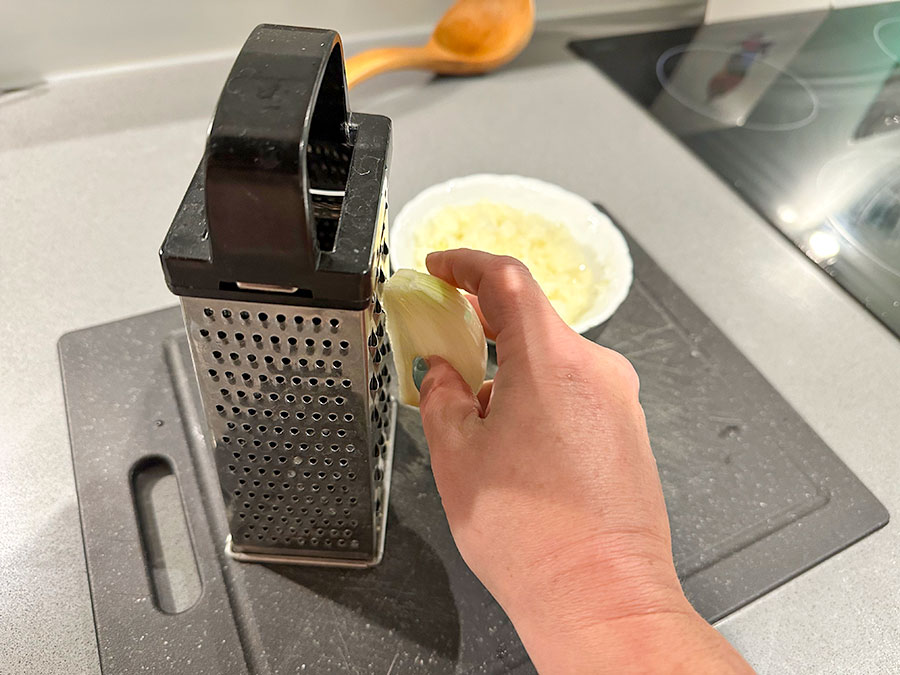
- 2 medium onions, grated
- 2 cloves garlic, grated
- 250 g minced beef
- 1 medium tomato, finely diced
- 1 teaspoon red pepper paste (biber salçası)
- 1 teaspoon tomato paste (If red pepper paste is not available, increase the tomato paste to 1 tablespoon instead.)
- Salt, freshly ground black pepper
- Pul biber (Aleppo pepper or chilli flakes)
- Cumin (optional)
- A small handful of parsley, basil and mint (fresh or dried)
- 1½ teaspoons balsamic vinegar
- Juice of ½–1 lemon
- 2 cups hot water
- Extra olive oil, for cooking
METHOD:
Preparing the Filling
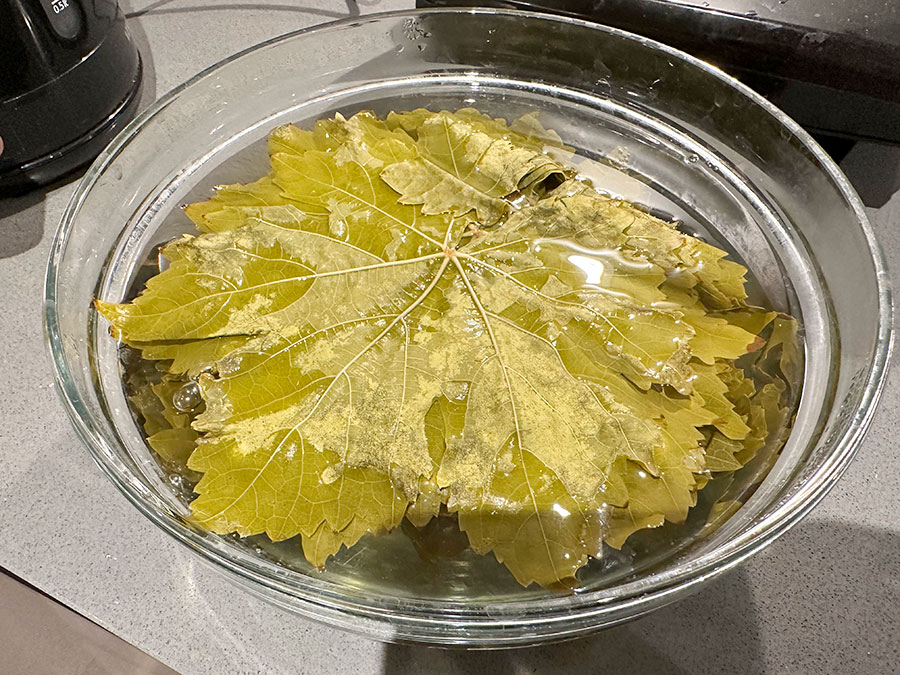
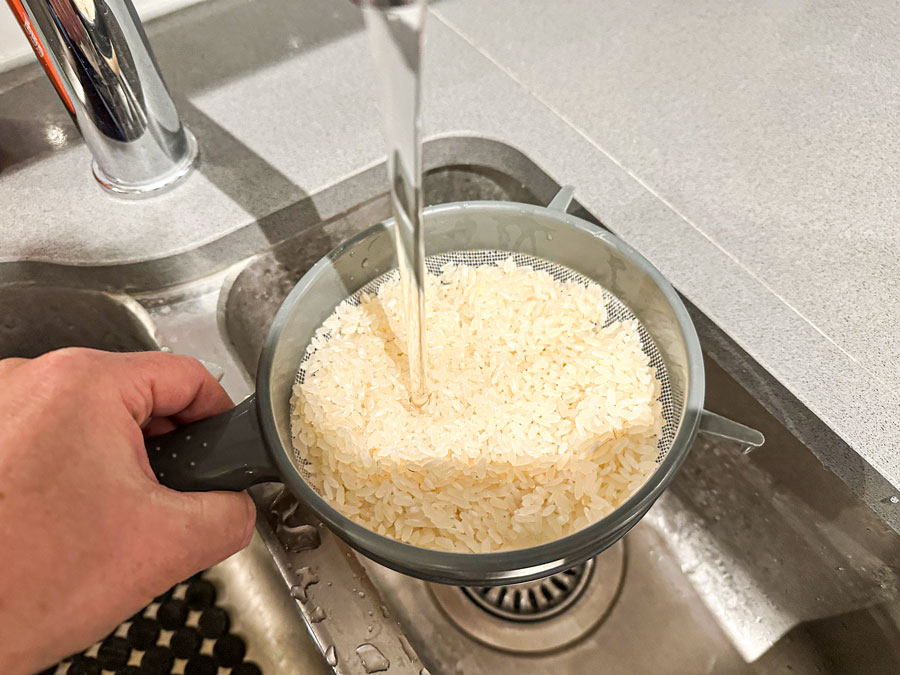
- If using preserved vine leaves, soak them in hot water for 2–3 minutes to remove excess salt. Rinse well and drain thoroughly. Rinse the rice several times until the water runs clear to remove excess starch.
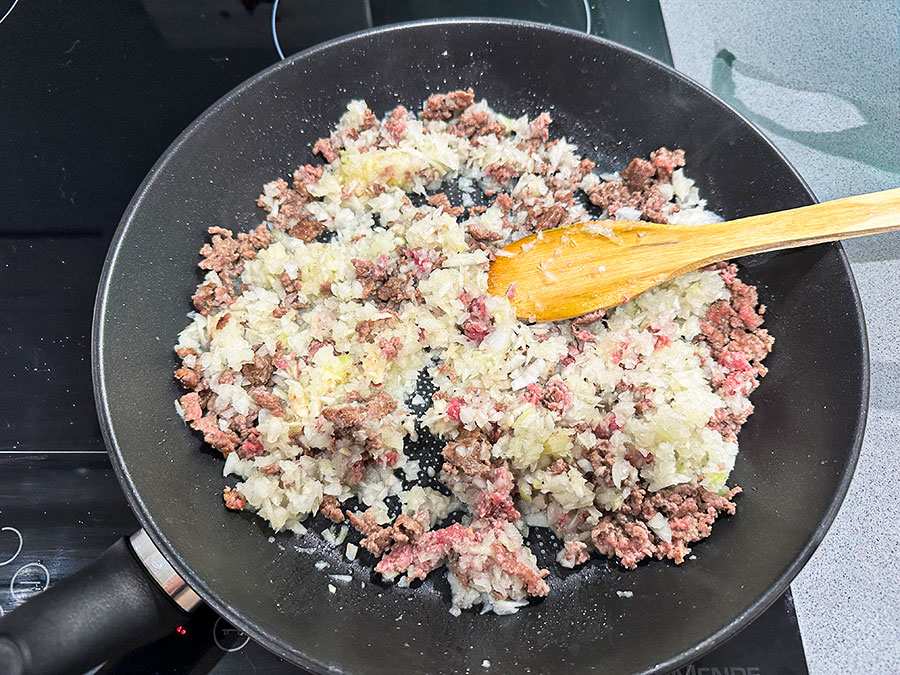
- Heat the olive oil in a wide, shallow pot over medium heat. Add the grated onion and garlic and sauté for about 3 minutes, stirring occasionally, until softened and fragrant.
- Add the minced beef and cook, stirring continuously, until it changes colour.
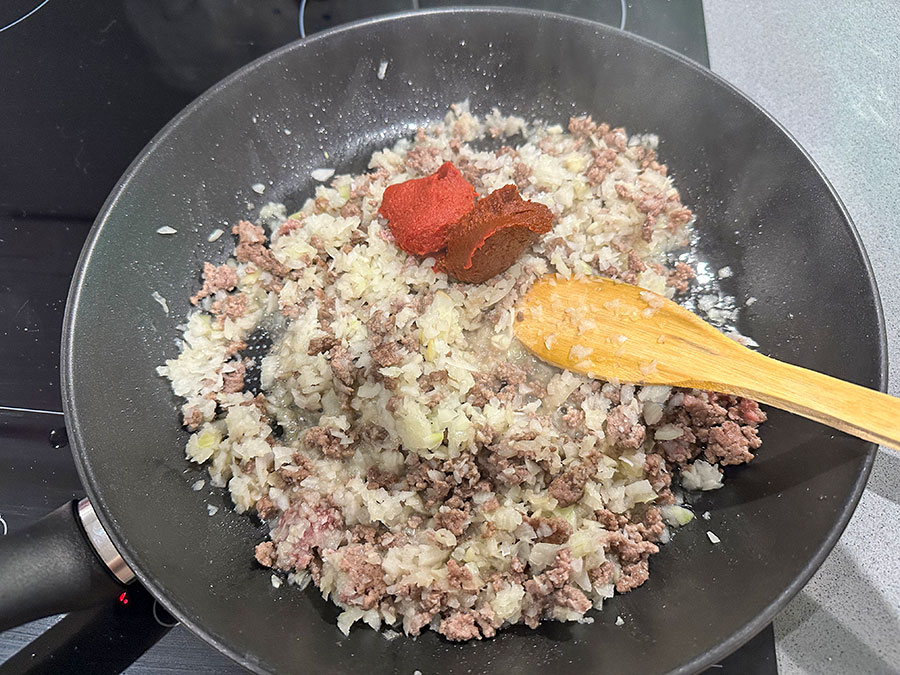
- Stir in the red pepper paste and tomato paste, mixing well.
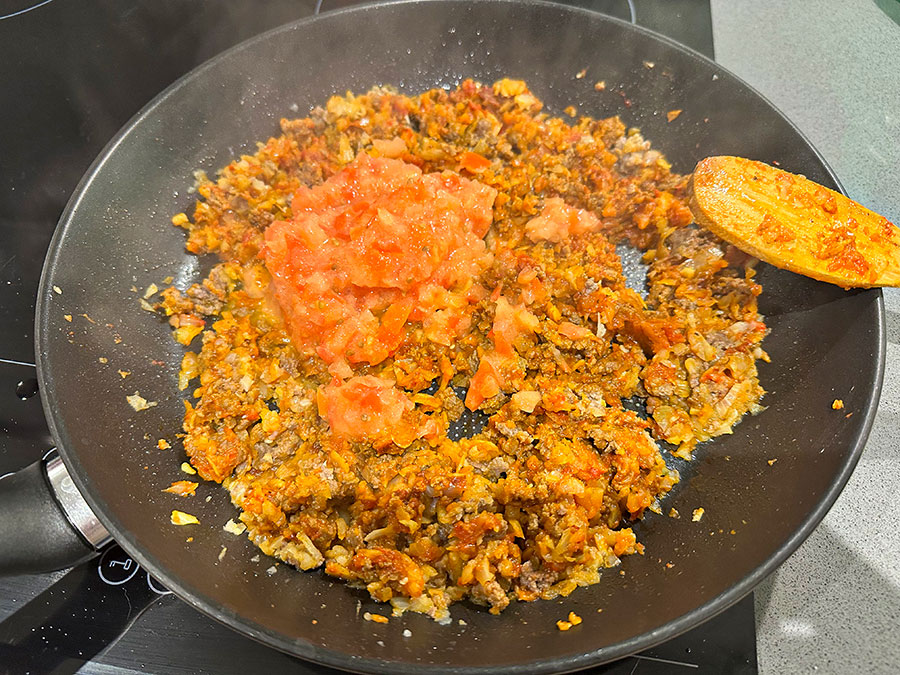
- Add the diced tomato and continue cooking for a further minute.
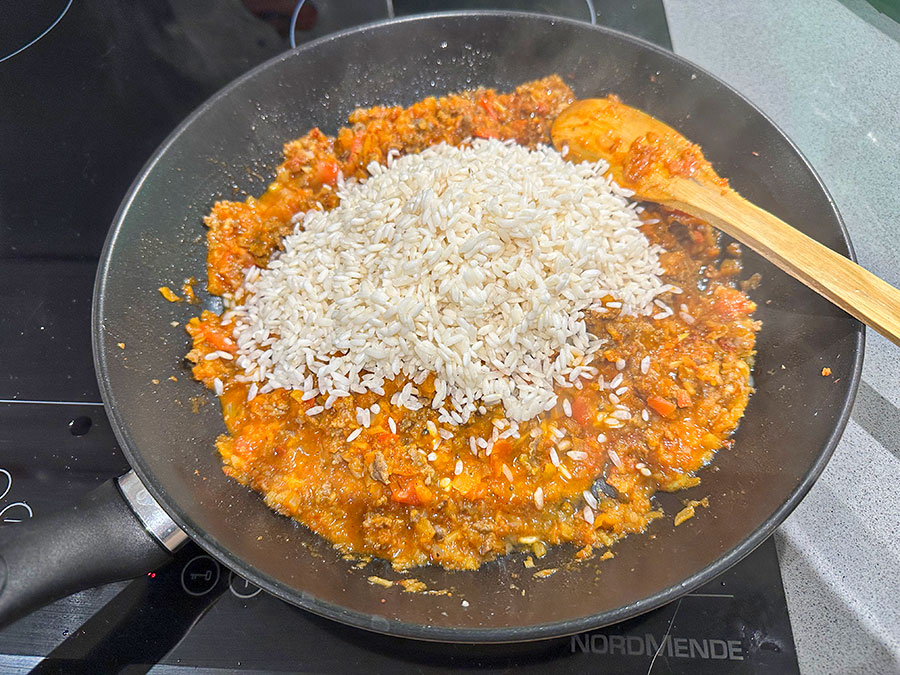
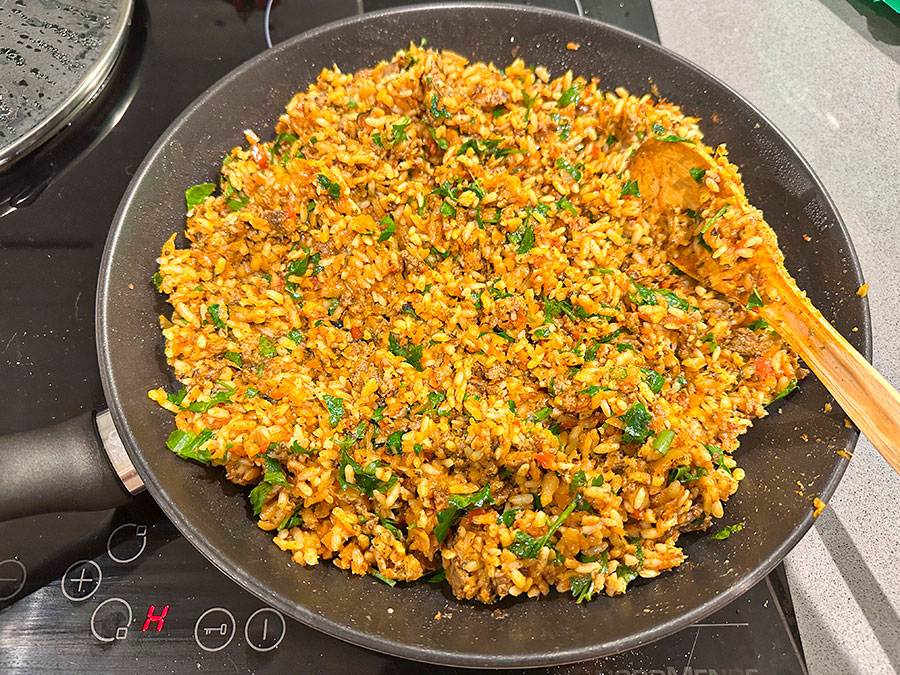
- Add the rice and stir to coat it evenly with the mixture.
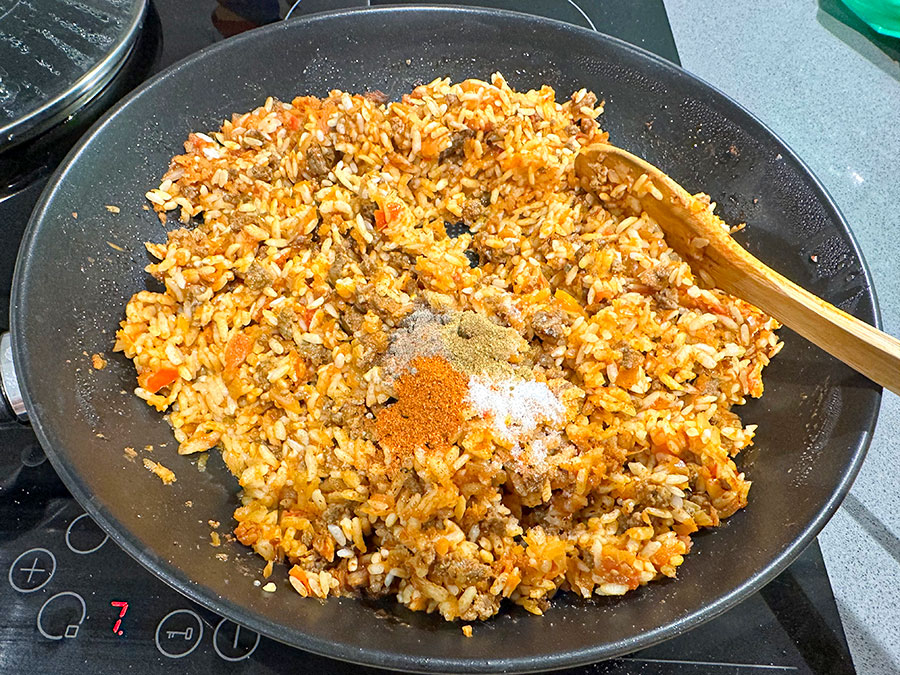
- Season with salt, black pepper, pul biber and cumin (if using). Remove the pot from the heat.
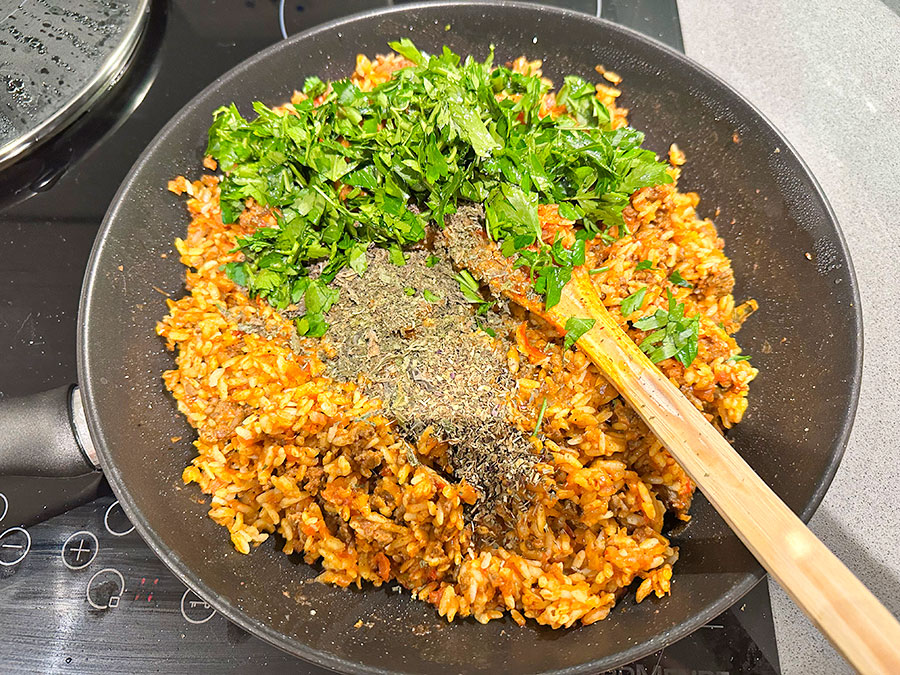
- Stir in the parsley, basil and mint. Set the filling aside to cool slightly.
Rolling the Vine Leaves
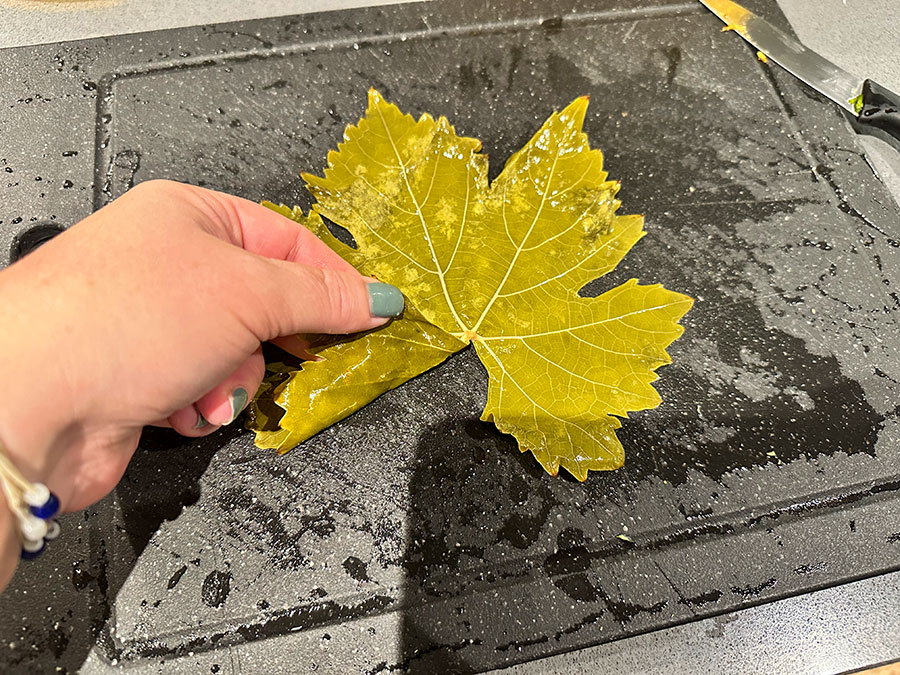
- While the filling cools, trim off the stems from the vine leaves using kitchen scissors.
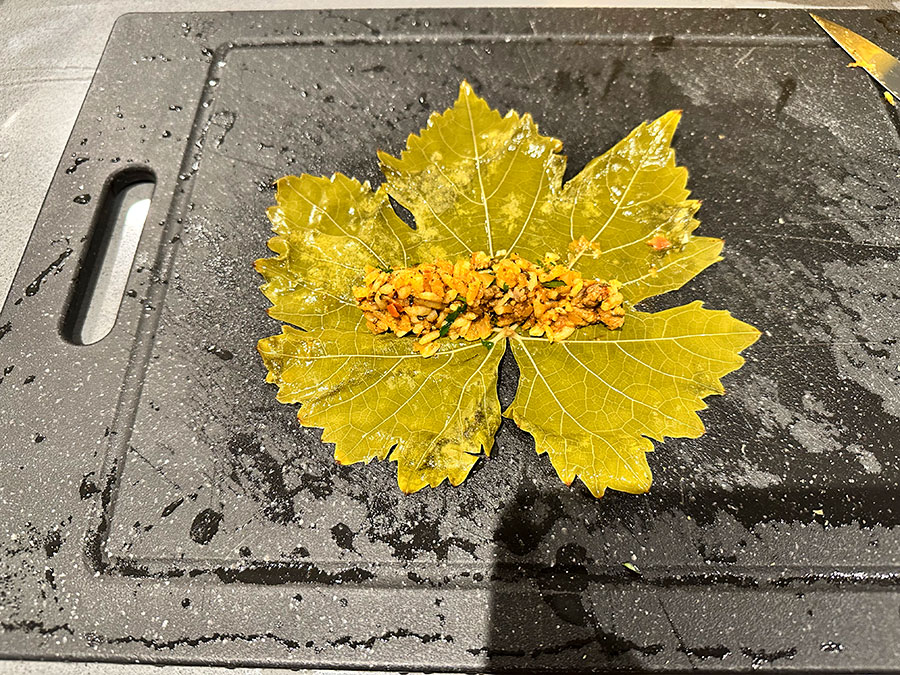
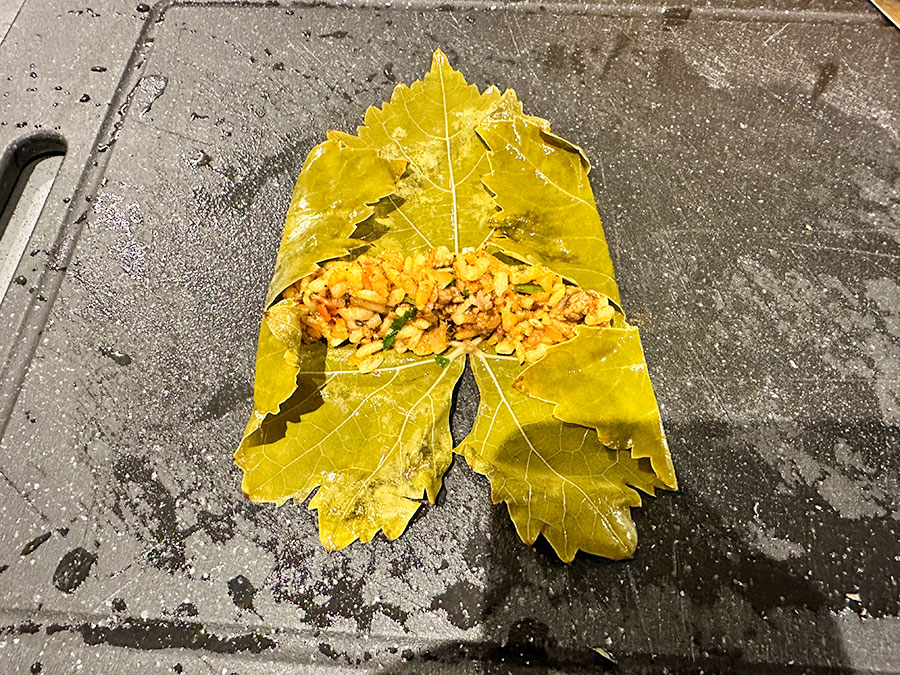
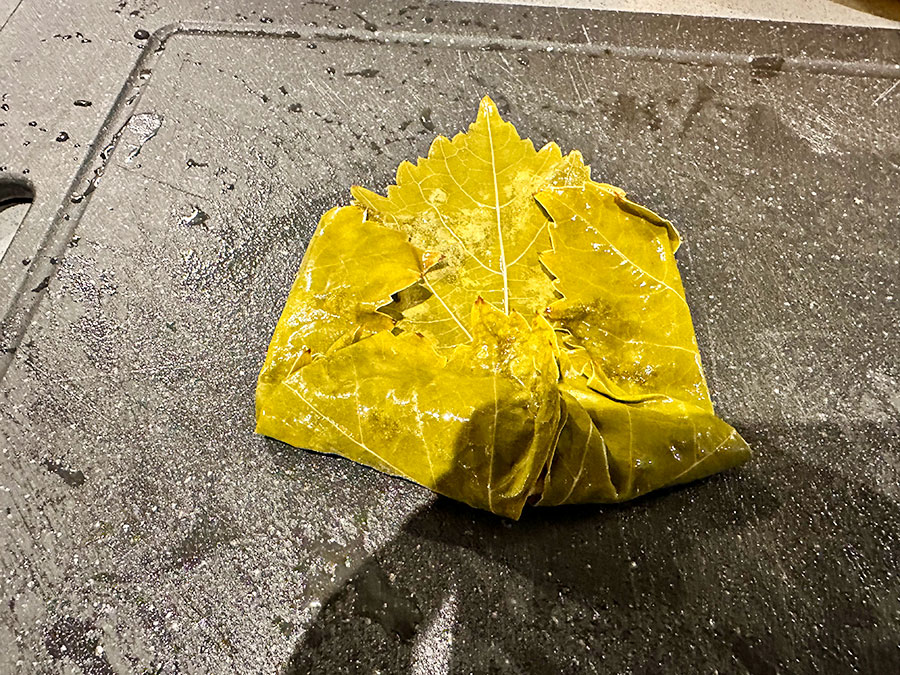
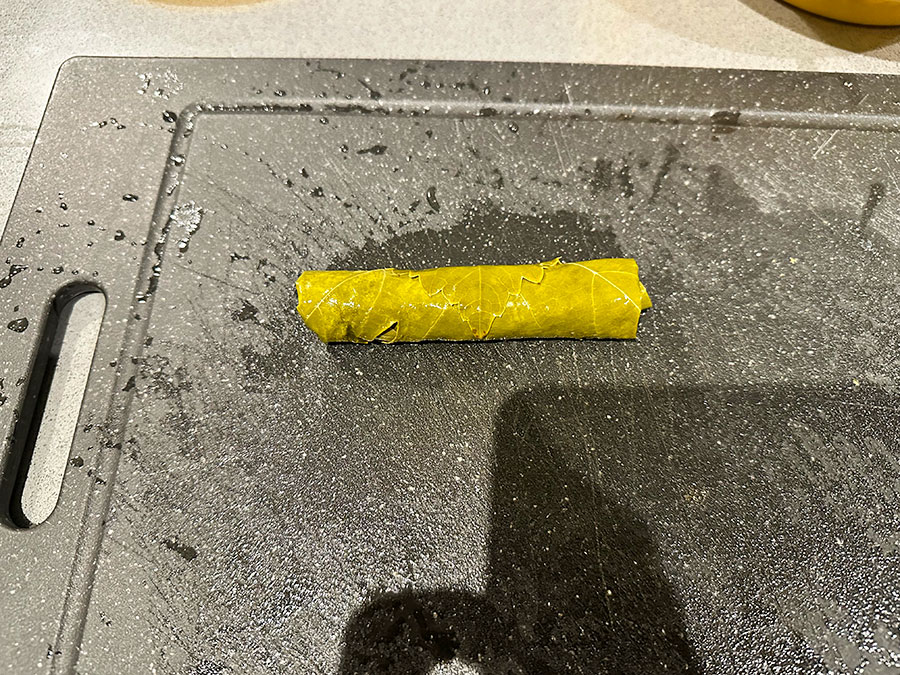
- Place one vine leaf on a plate, vein-side facing up (the shiny side should be on the outside once rolled). Place a heaped teaspoon of filling near the stem end. Fold the bottom over the filling, fold in both sides, then roll into a small cigar shape. Do not roll too tightly, as the rice will expand during cooking.
- Line the bottom of a large, wide pot with a layer of leftover vine leaves to prevent sticking.
- Arrange the stuffed vine leaves neatly in the pot, seam-side down, packing them snugly but without crushing.
Cooking
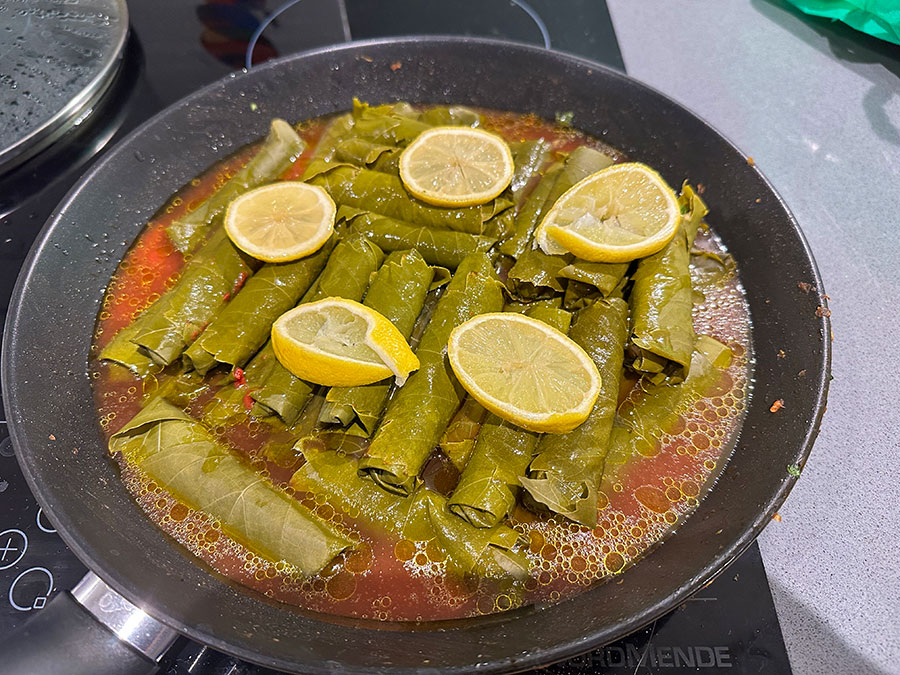
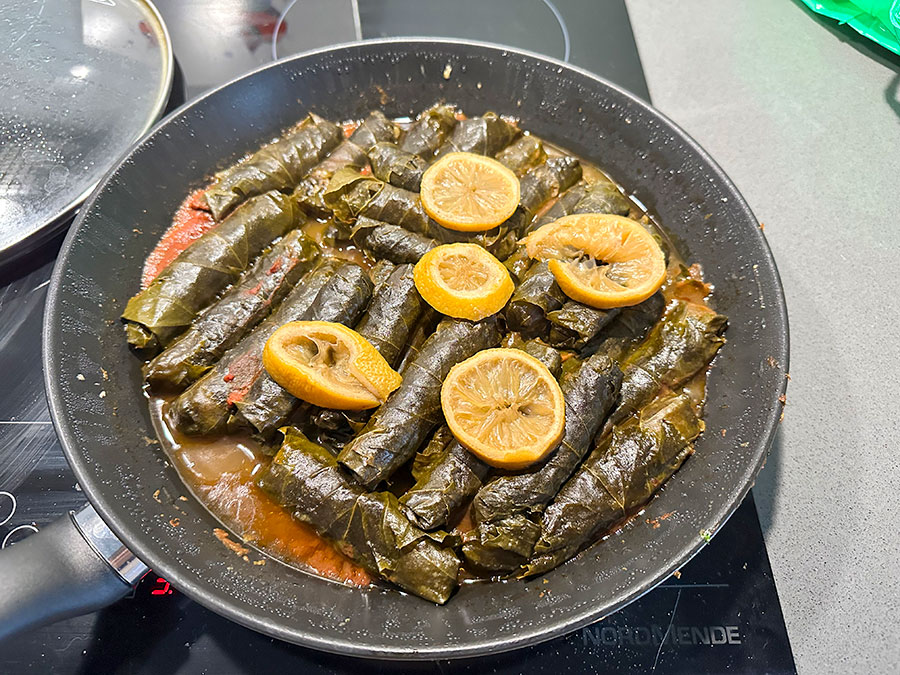
- In a separate bowl, mix the balsamic vinegar, the juice of half a lemon, a drizzle of extra olive oil, the hot water and, if desired, an additional teaspoon of tomato paste. Pour this mixture gently over the stuffed vine leaves. The liquid should just cover the surface of the rolls. If needed, add a little more hot water; if it seems too much, reduce accordingly.
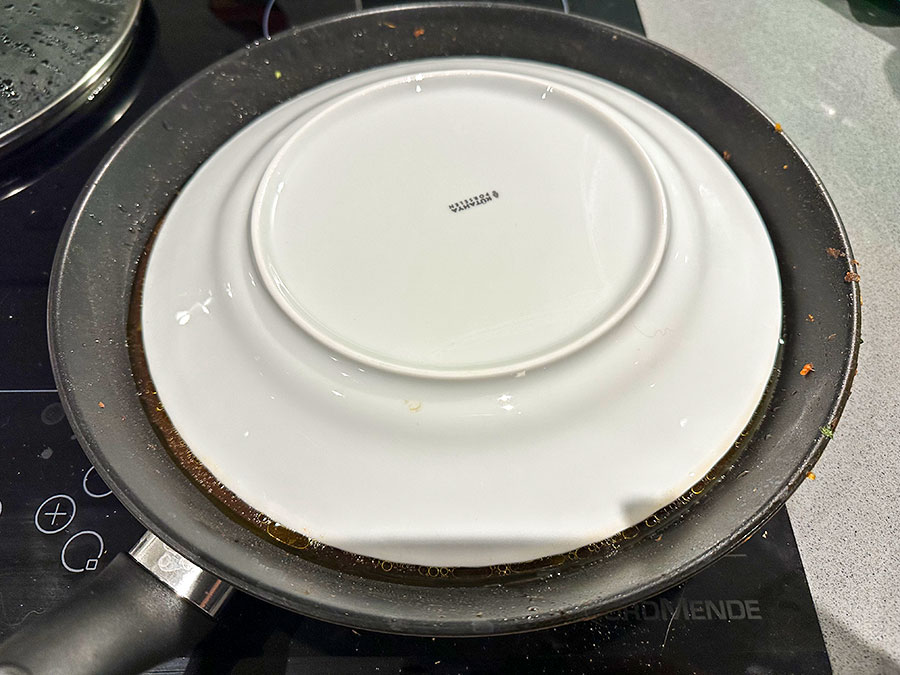
- Slice the remaining half of the lemon and arrange the slices over the top of the rolls. If you wish, place a small heatproof plate or bowl (slightly smaller than the pot) on top to keep the vine leaves tightly packed and prevent them from unravelling during cooking.
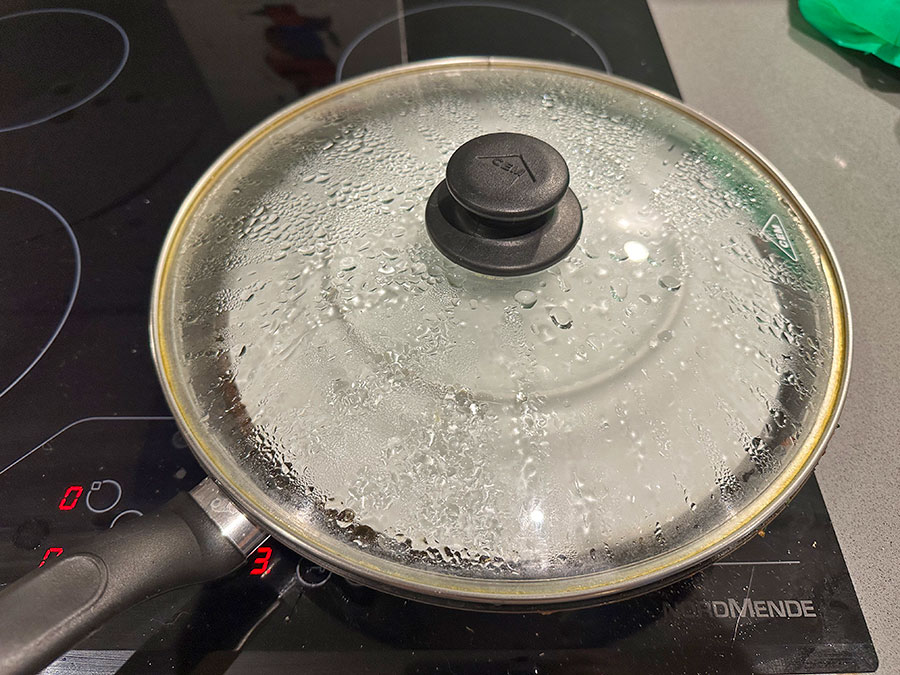
- Cover with a lid and bring to a gentle simmer over low heat. Cook for 45–60 minutes.
- Turn off the heat and allow the pot to rest, covered, for at least 1 hour. During this time, the remaining liquid will be absorbed, the rice will finish cooking, and the vine leaves will become perfectly tender.
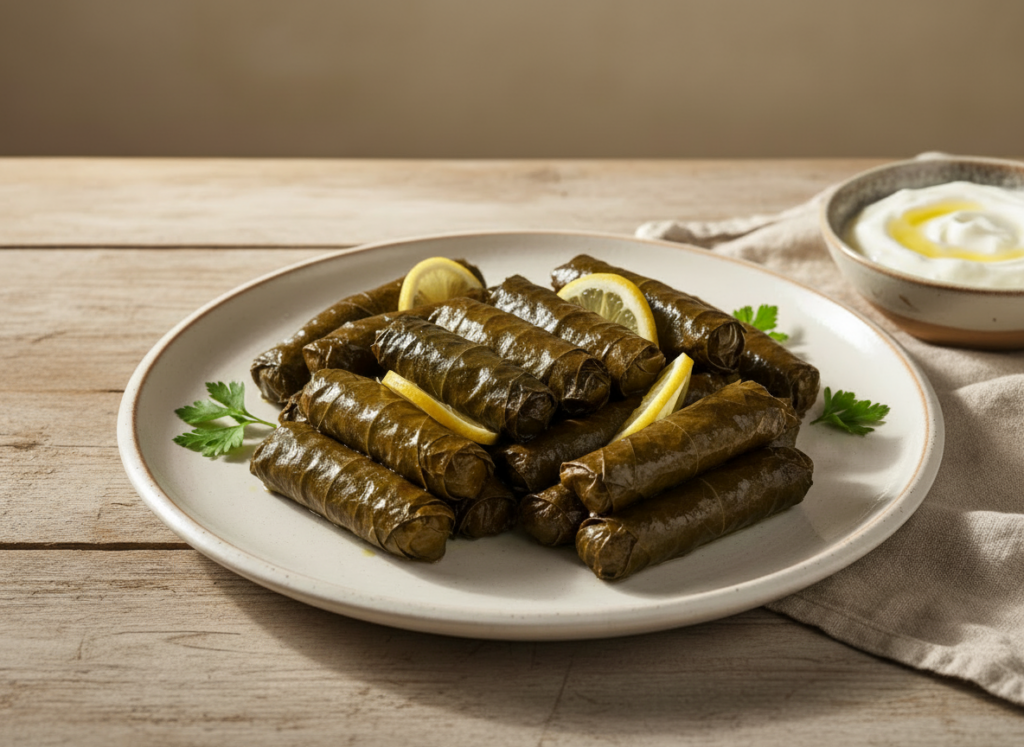
Serve warm, ideally with plain yoghurt on the side.
Enjoy!